August 25 – September 5, 2019
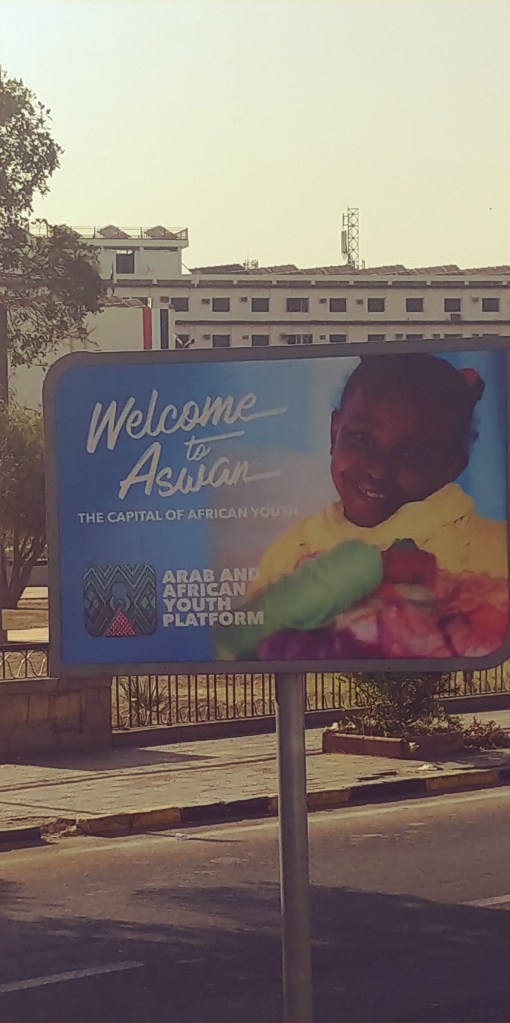
After Esna, we headed as far south as we could go on the Nile to the Aswan Dam. The dam was built during the 1960’s by Gamel Nassar, then Egypt’s president. The dam, known as the High Dam, replaced a smaller version up the river that had been built in the early 1900’s by the English, when they controlled Egypt. Annual and constant flooding by the Nile in the spring time was hurting the farming activities and villages that lived on or near the banks of the Nile. The new dam was seen as a way to control the flooding, produce electricity, and prevent the annual damage done by the river. While this plan succeeded, it also introduced major sediment deposits into the section before the dam that now needto be dealt with, as these sediments used to go downstream and actually provided the rich fertile soil of the Nile river banks.
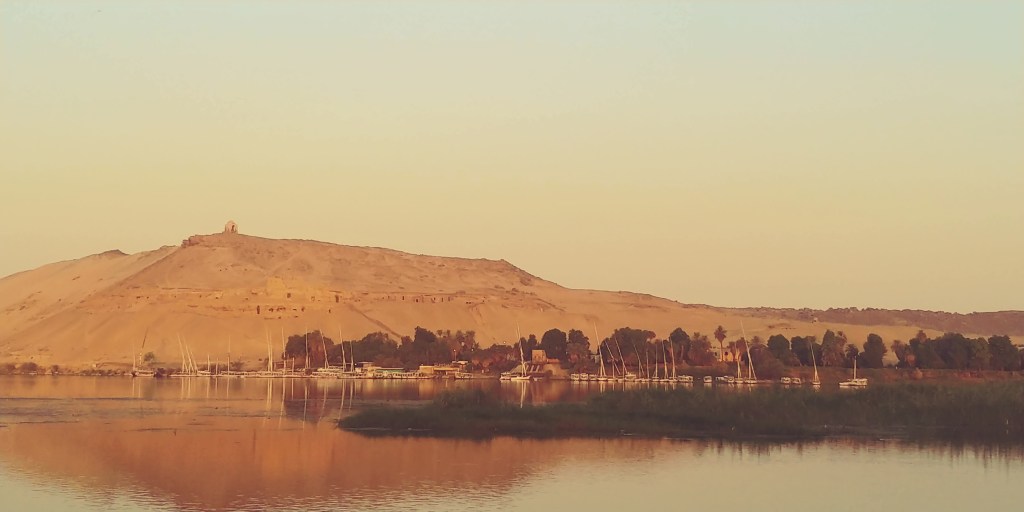
The dam was financed by the then Soviet Union and designed and built by a Russian company based in Moscow. The completion of the dam also saw the construction of the Lotus Flower Monument which signified Egyptian and Soviet cooperation during the project.
We drove across the dam to the Aswan airport to board a plane to get to Abu Simbel. The Aswan airport is very small, very nice, and pretty much the only reason it exists is to shuttle people back and forth from Aswan to Abu Simbel. It is about an hour flight. We will fly back and forth the same day. So, that means we have preset departure and arrival times. What does that tell you, avid reader? Yep, the darn plane is an hour late arriving. We lost an hour’s time wandering around Abu Simbel. It still worked out OK as we were able to see this amazing site in it’s entirety.
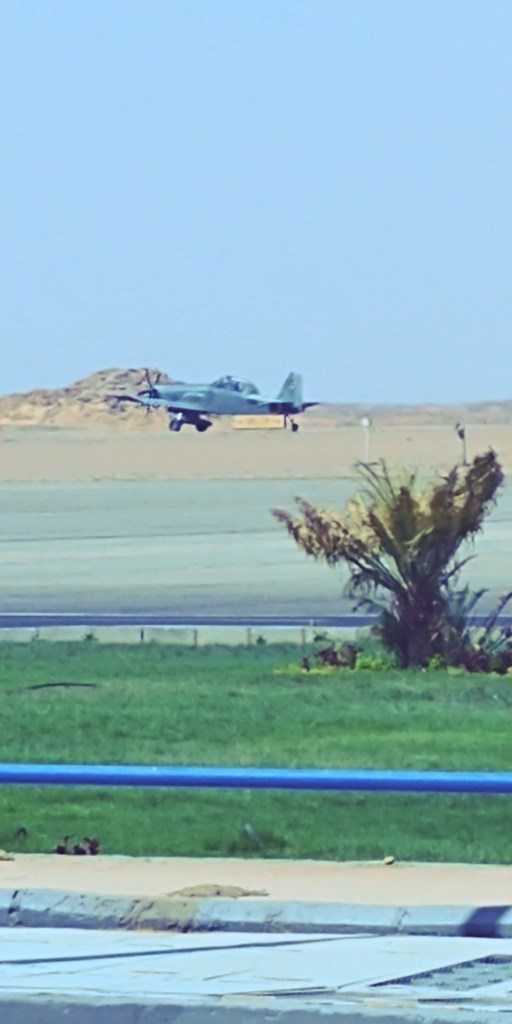
While sitting around the airport we did see a pretty cool plane, a World War II American P38 taking off.
Remember how the dam was built in the 1960’s and created one of the world’s largest artificial bodies of water? Well, think about that. Before the lake was created, there were towns, farms, and yep, temples and tombs in the valley and hills of the now Lake Nassar. They had to move tens of thousands of people out of the valley. They also moved 22 precious archaeological sites. A lot of them went to museums and such, but these temples of Abu Simbel were moved in their entirety from their original location on the bank of the Nile River, to the top of the mountain that towered over them, about 250 feet up.
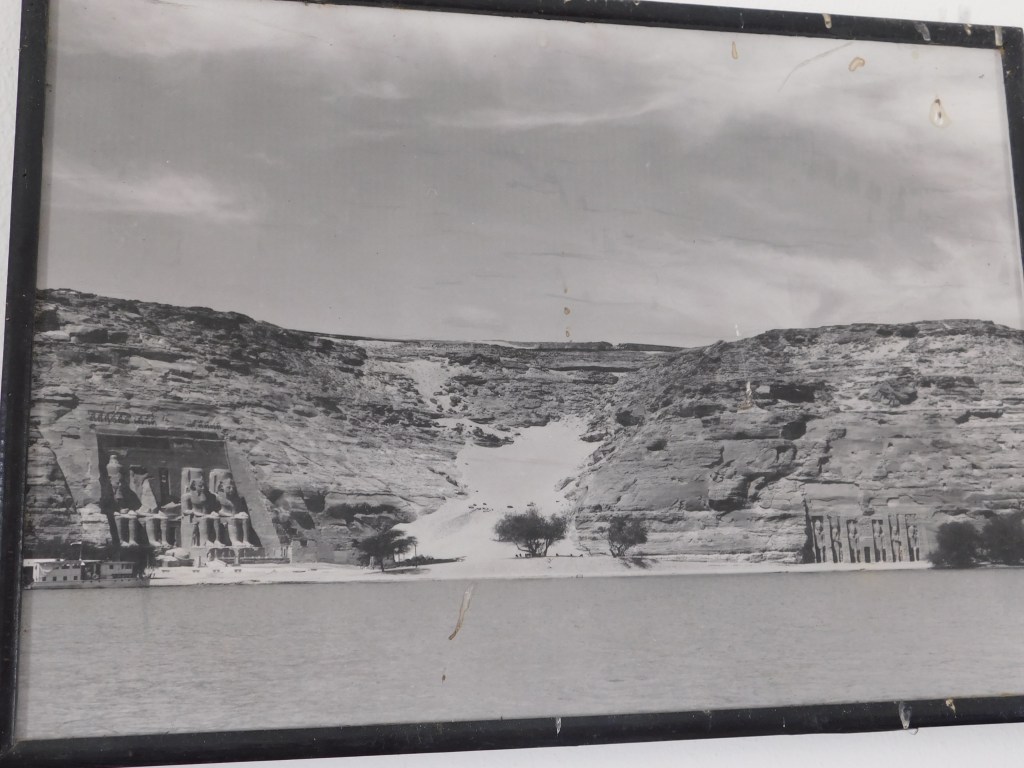
Ramses II built these temples 3,500 years ago to celebrate his great victory at the Battle of Kadesh. This battle featured the largest even recorded chariot battle in history. The chariots were estimated at between 5,000 – 6,000 in number. Ramses II defeated the Hitites in this battle, located near the current Lebanon-Syrian border.
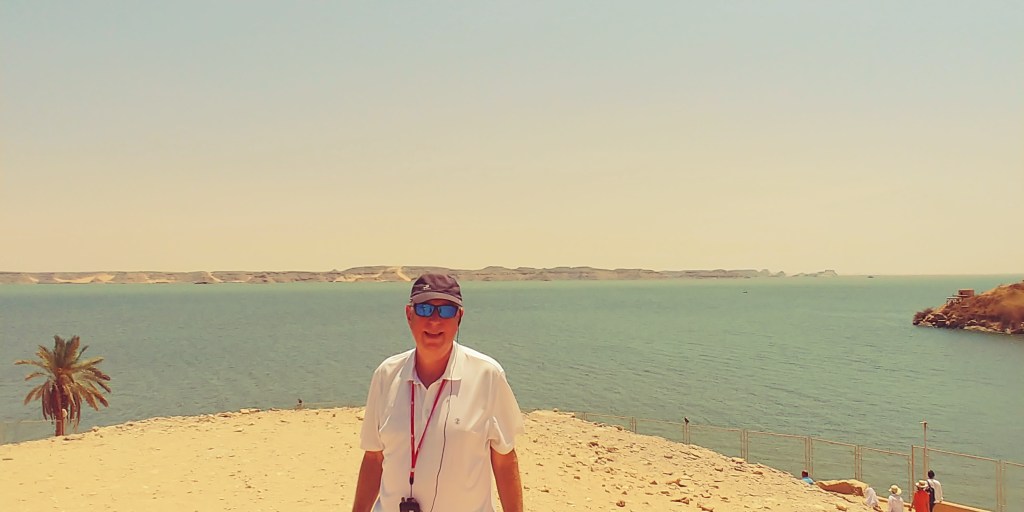
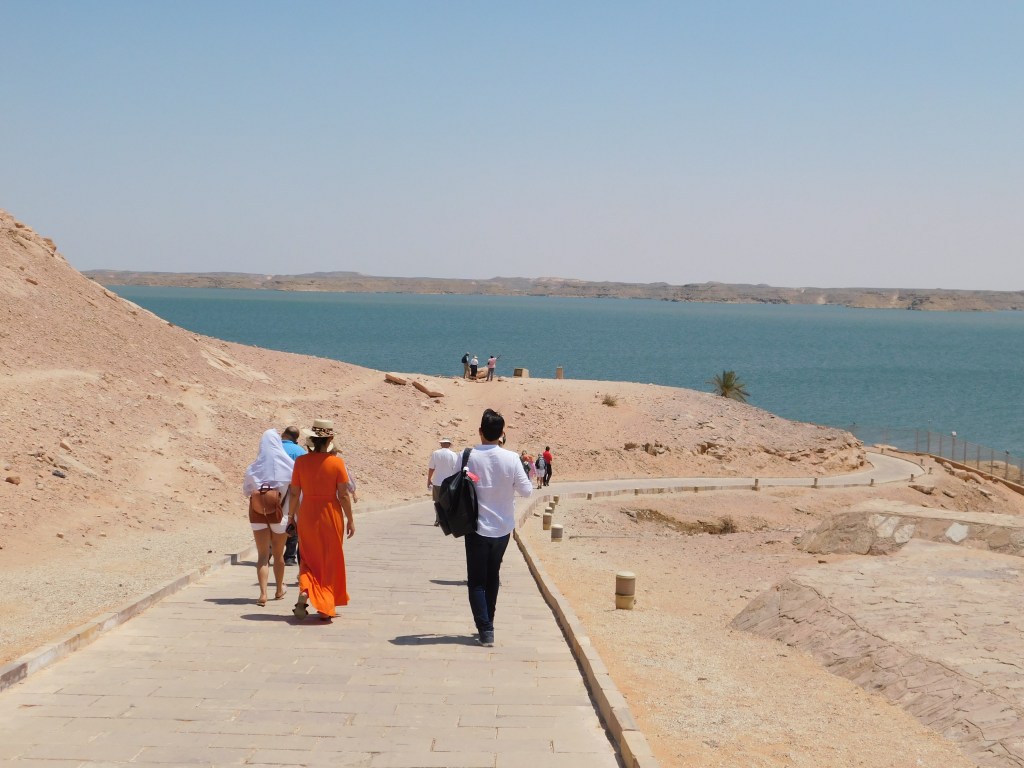
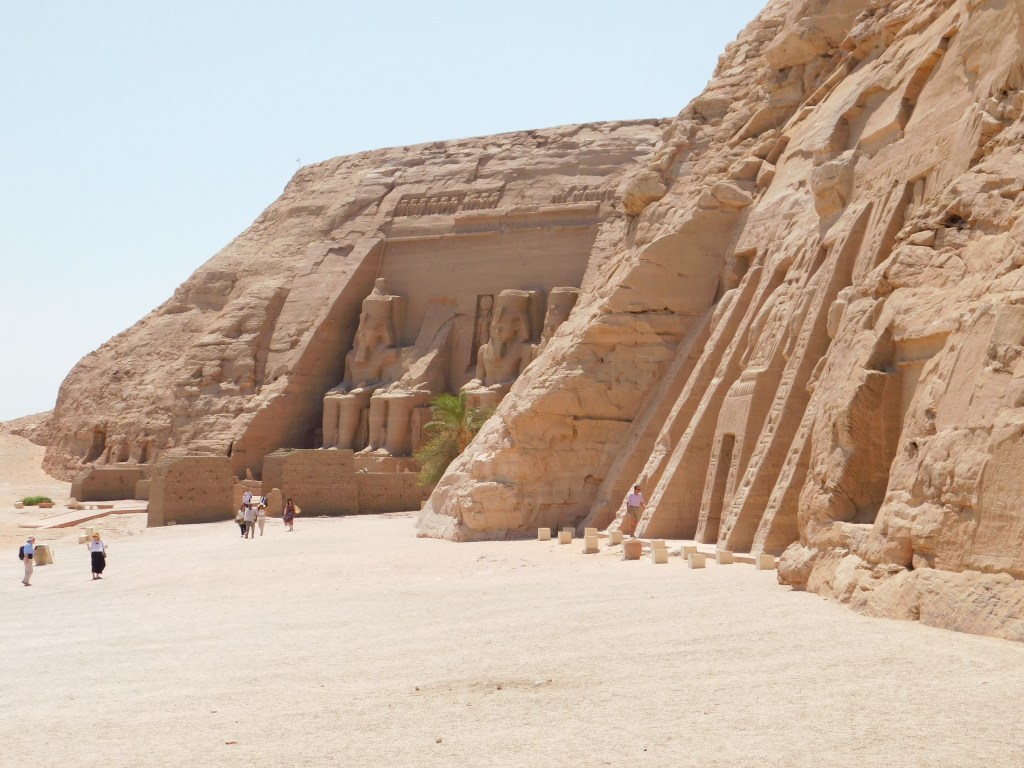
We walk around the mountain path and are greeted by this fantastic image.
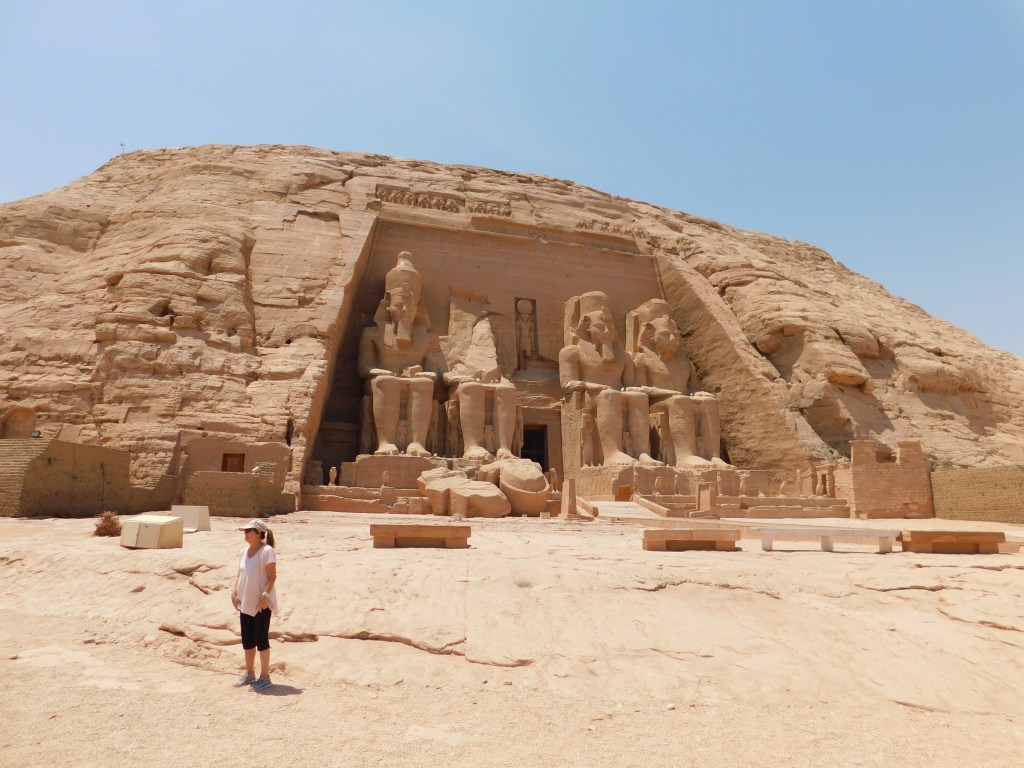
These statues are 66 feet tall. They were moved exactly as they laid originally at the bottom of the mountain. So, the statue that has the head toppled off was left in it’s original state and not repaired when they moved the temples.
The temples fell into disuse for thousands of years and got covered and filled with sand. In 1813 Swiss journalist Jean-Louis Bruckhardt found just the very top part of the frieze of the temple above the sand line. He realized there must be something important below and told the world about it. In 1817 the Italian explorer Giovanni Belzoni was able to excavate the entrance and get into the temples.

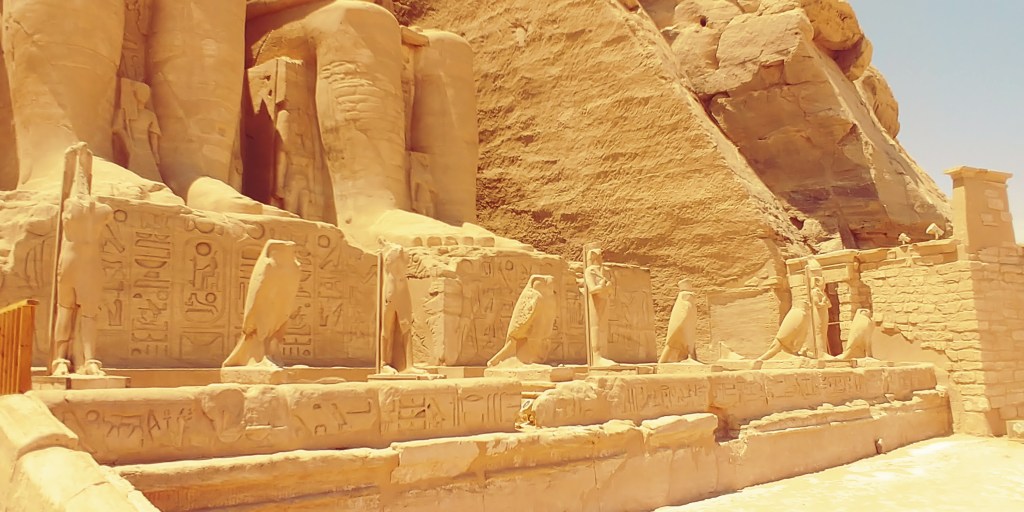
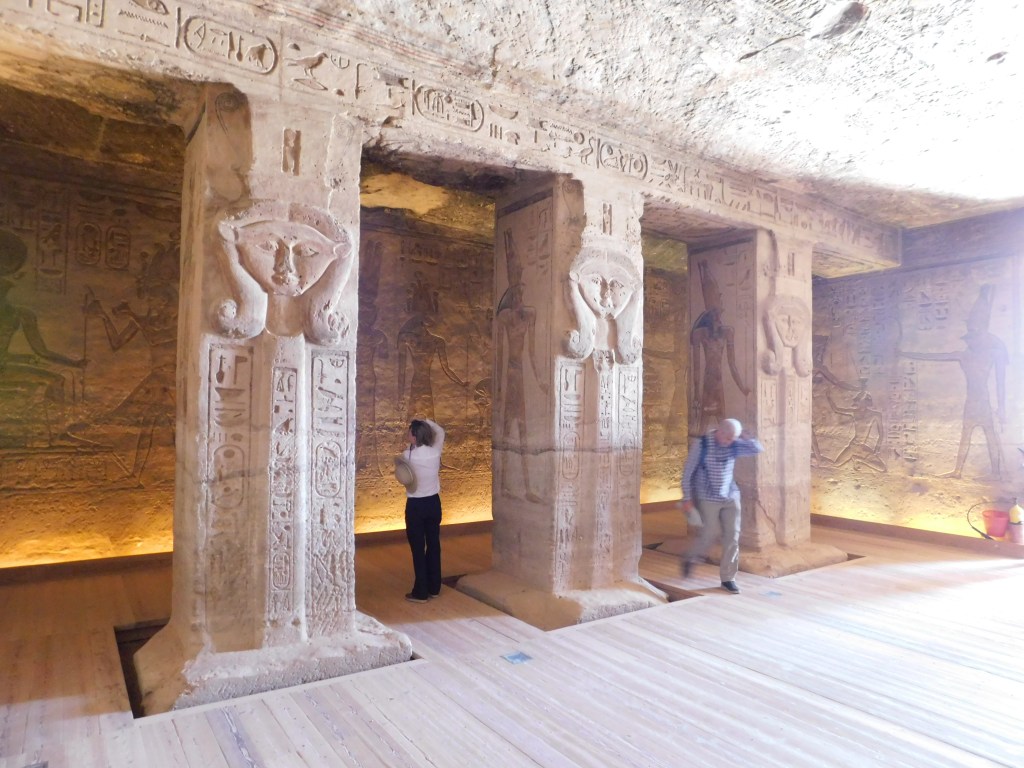
After gawking at the outside, it was time to head inside this amazing temple.
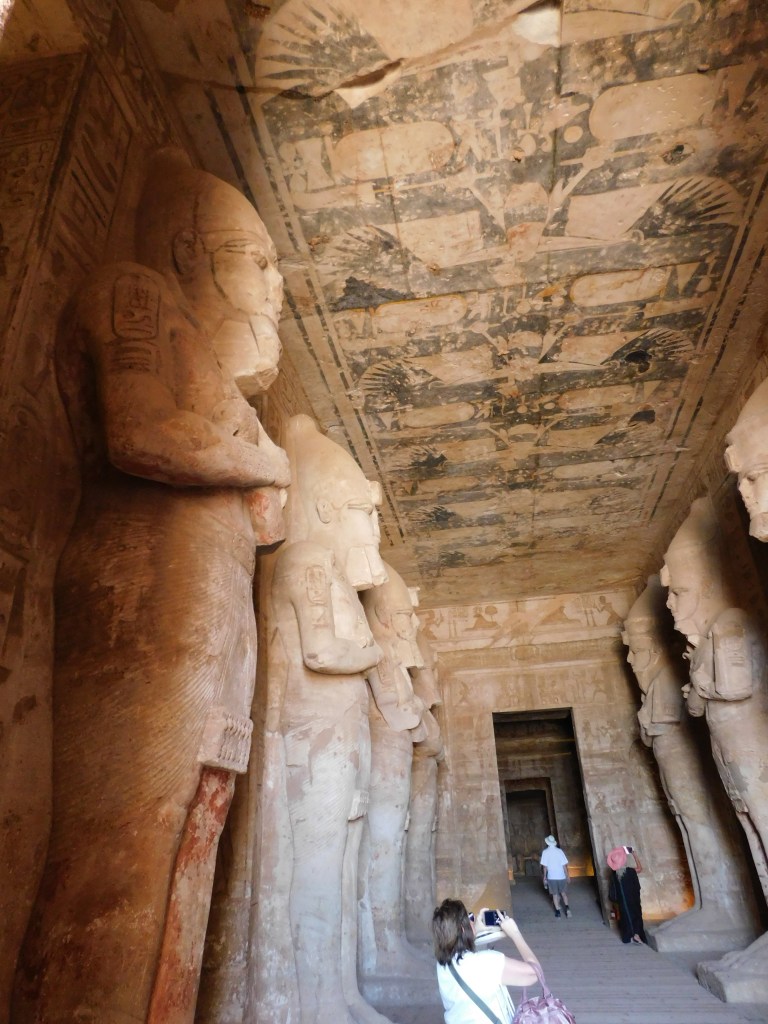
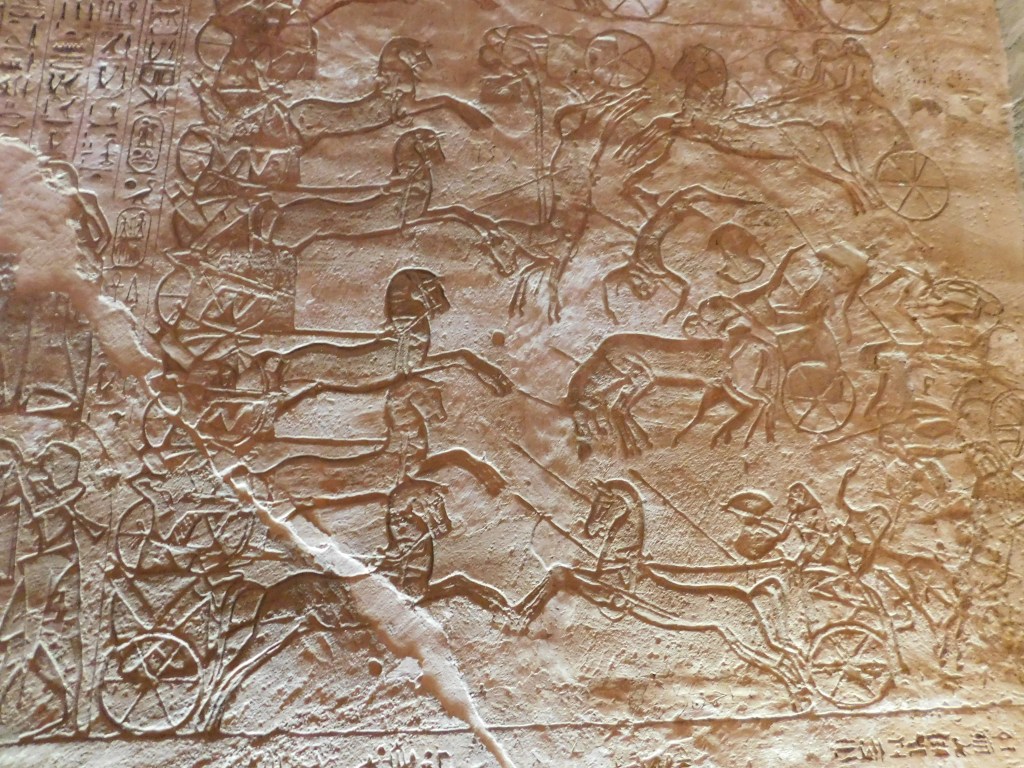
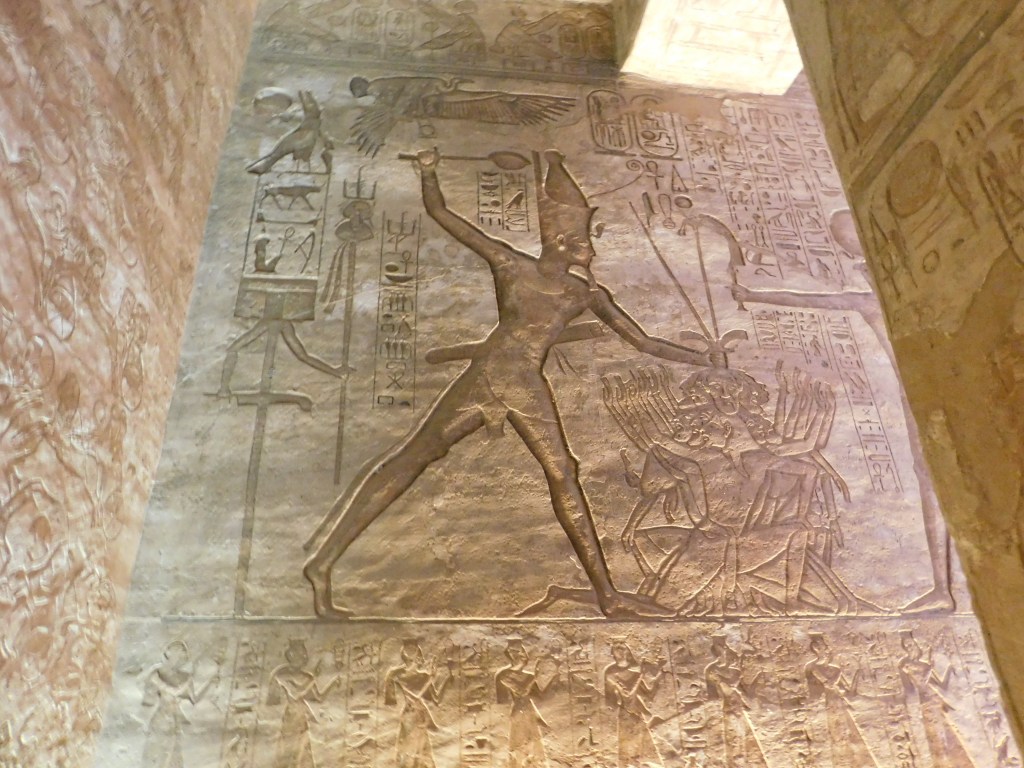
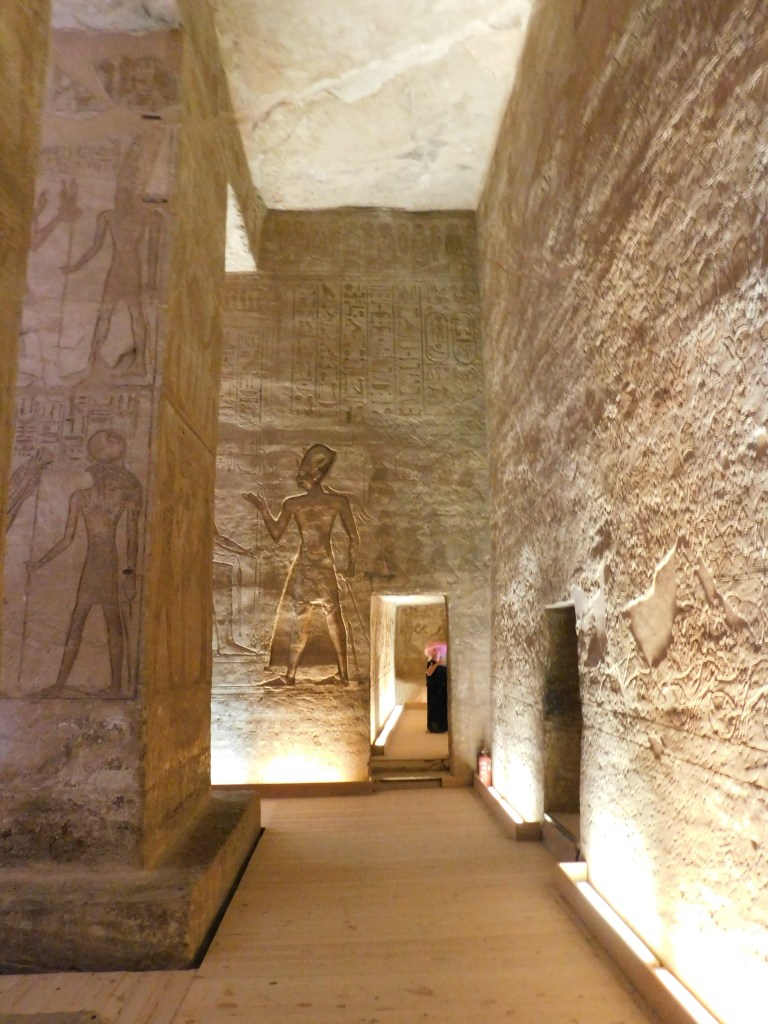
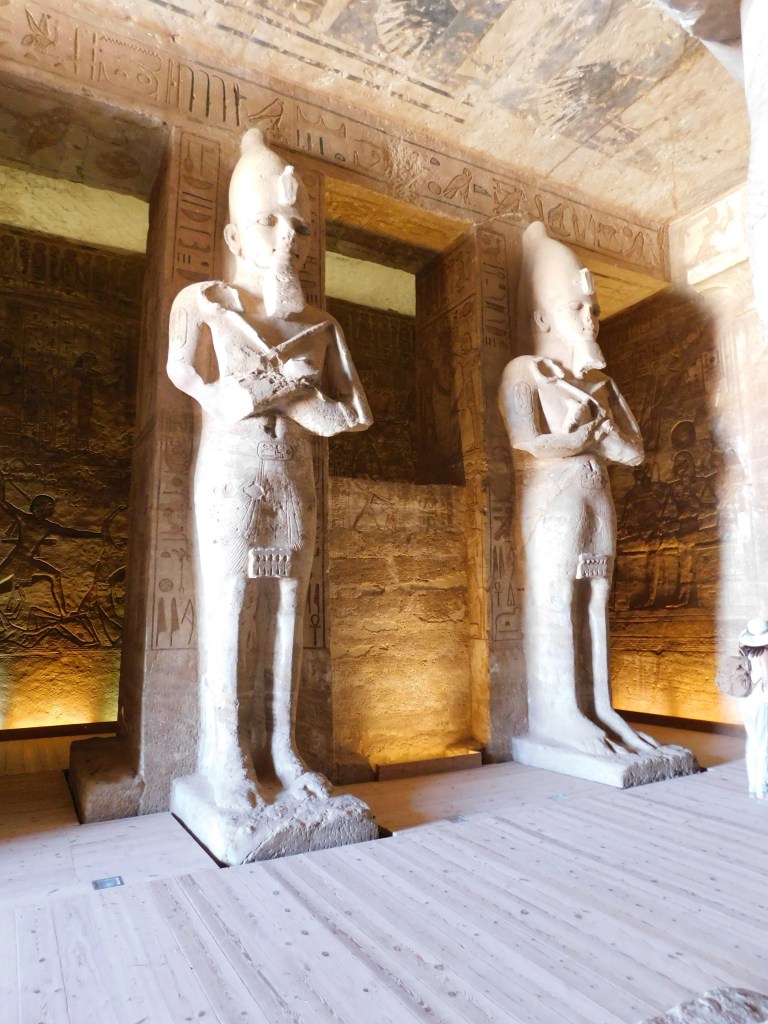
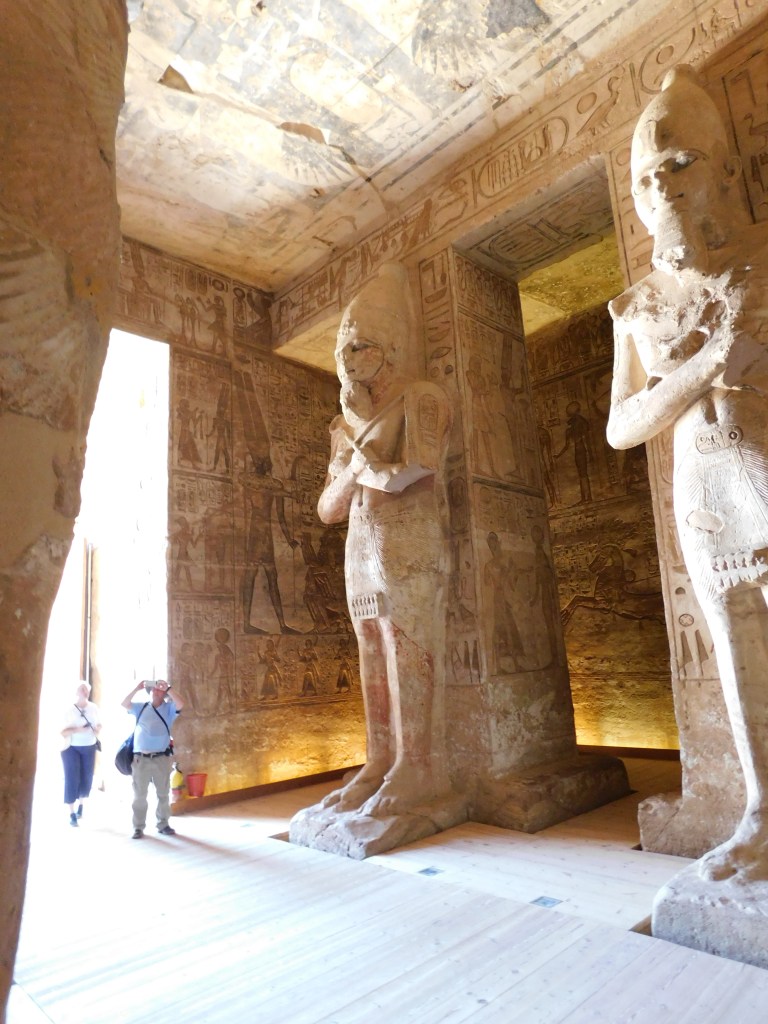
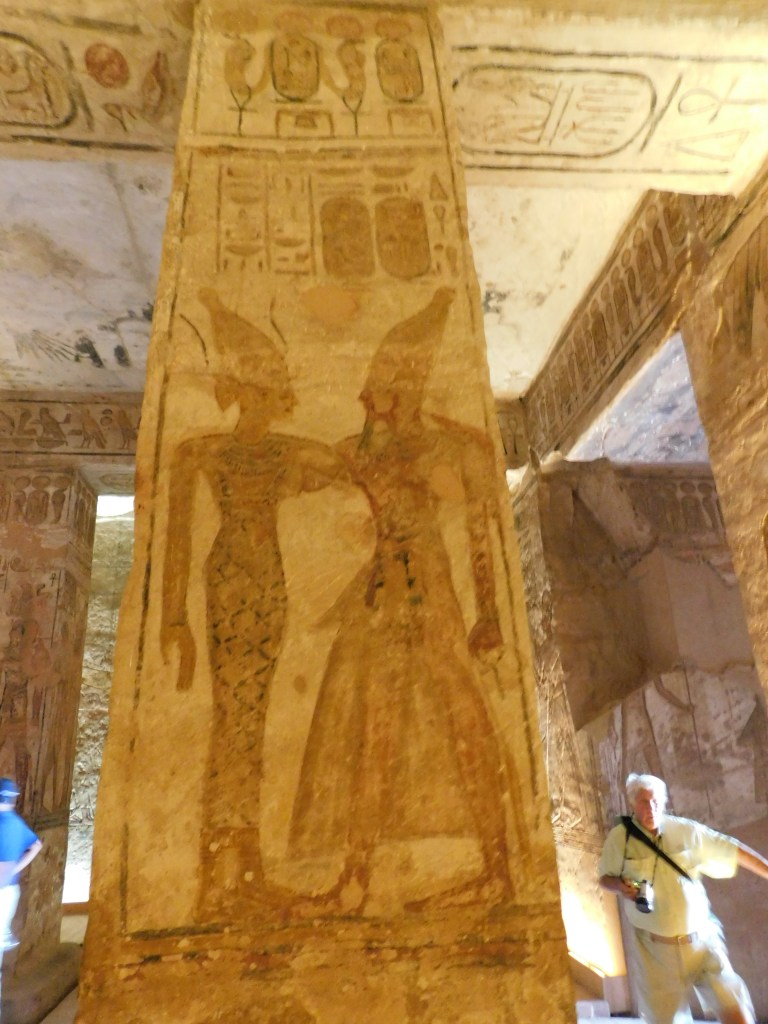
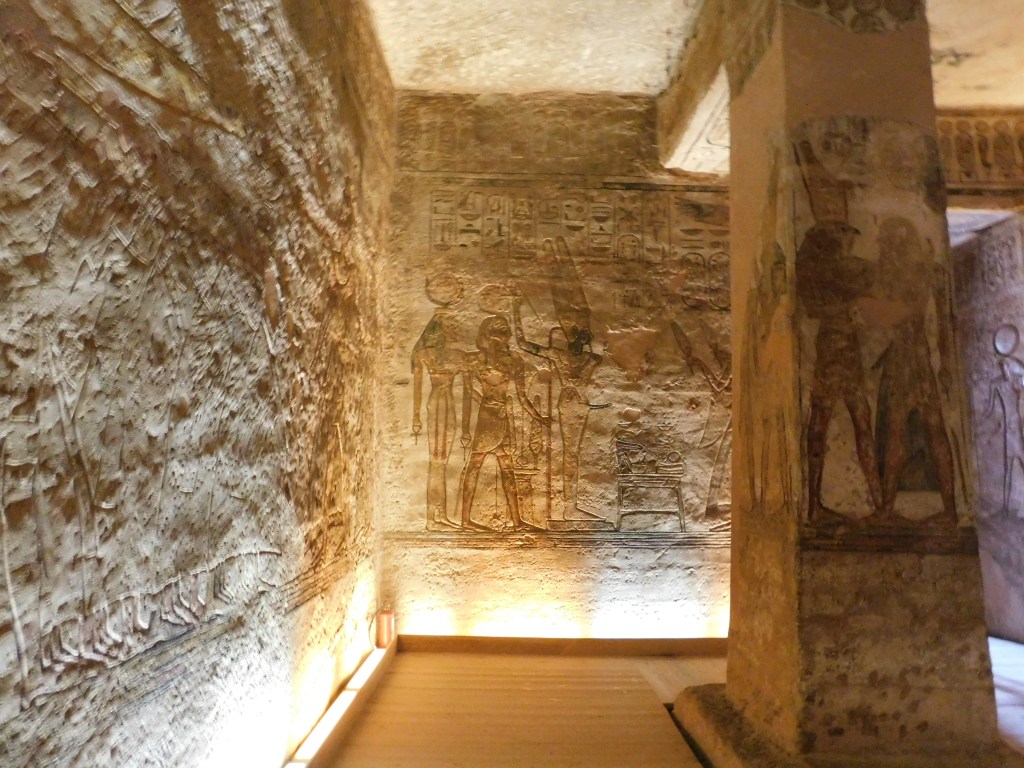
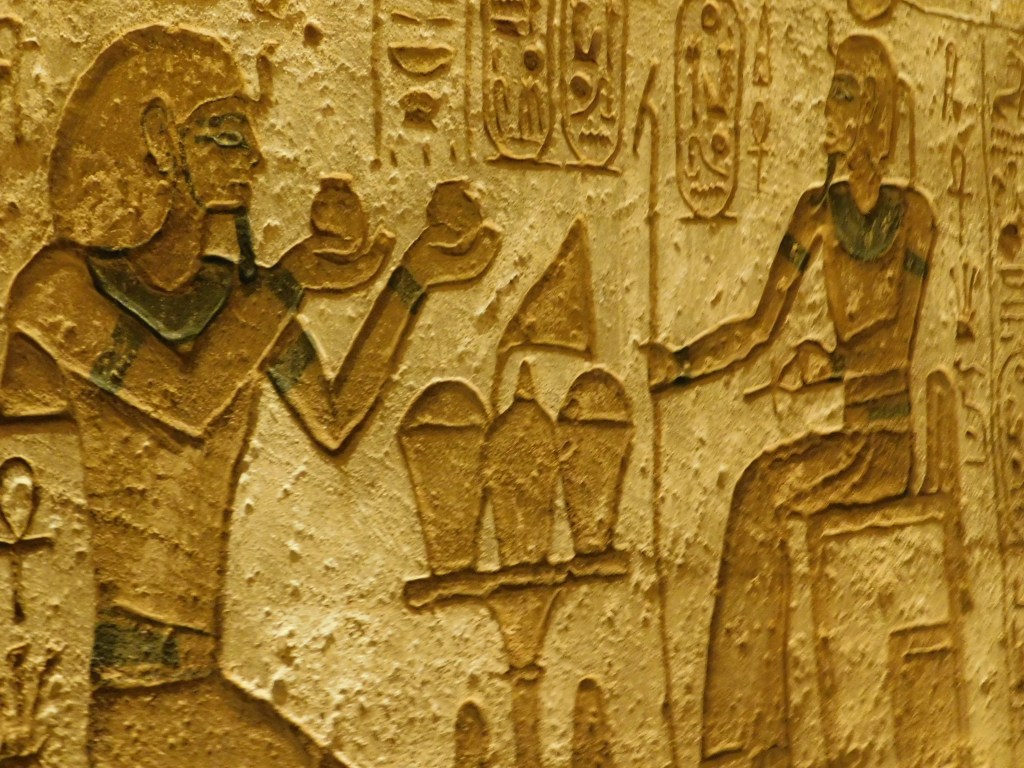
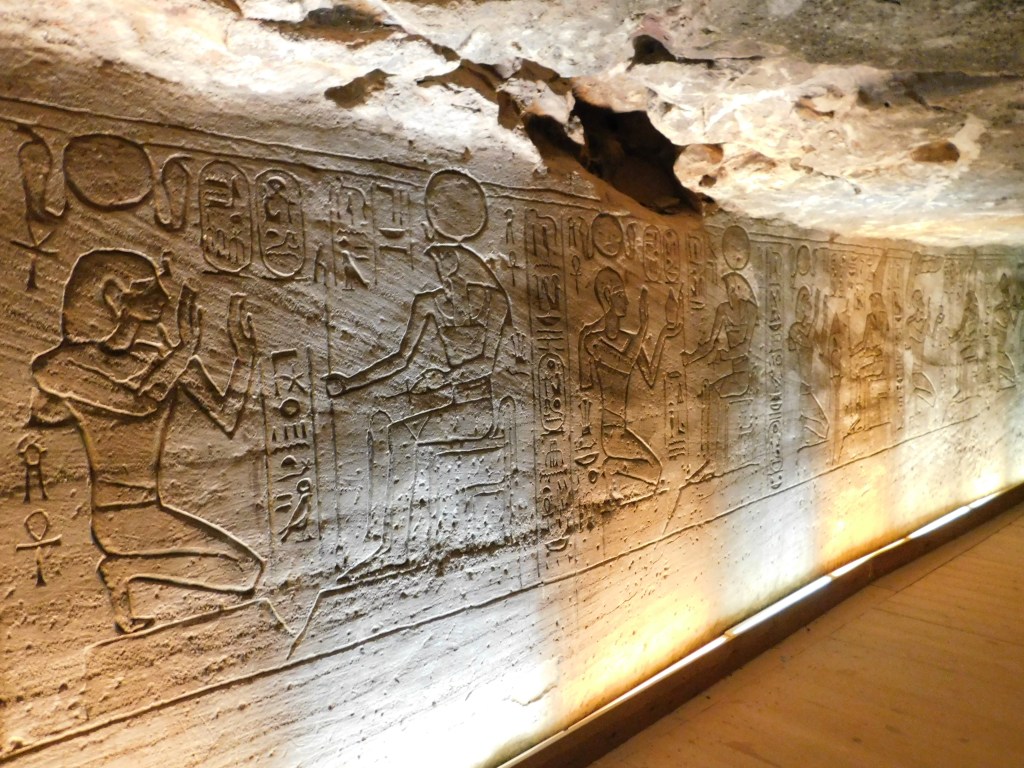
Remember, all of this was originally 250 feet below, on the bank of the Nile River. It was cut up, disassembled and reassembled up here. It is virtually impossible to see any joint or cut lines throughout the temple. Absolutely amazing. The temples were moved by an international team of archaeologists and heavy equipment operators through UNESCO at a cost of $40,000,000 between 1964 and 1968. The blocks were cut up into 20 ton portions and moved up the mountain.
The other temple is dedicated to Queen Nefetari. Although not a big as RamsesII temple, it is still very impressive, especially when you consider she was just a Queen, not a Pharaoh or ruler.
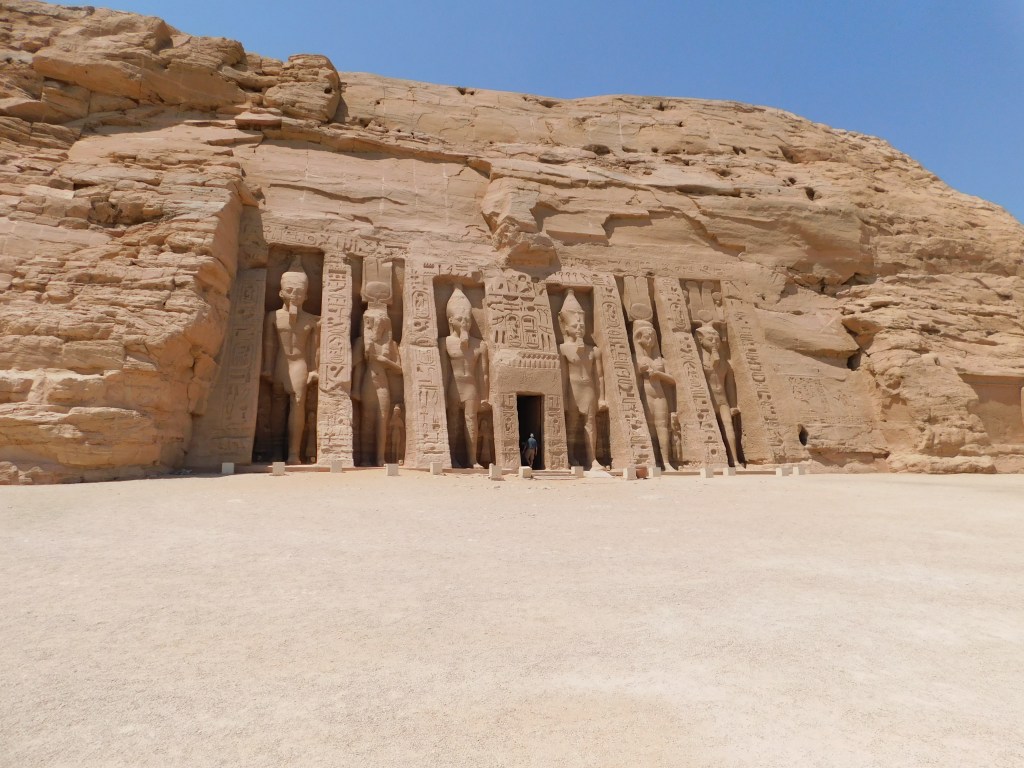
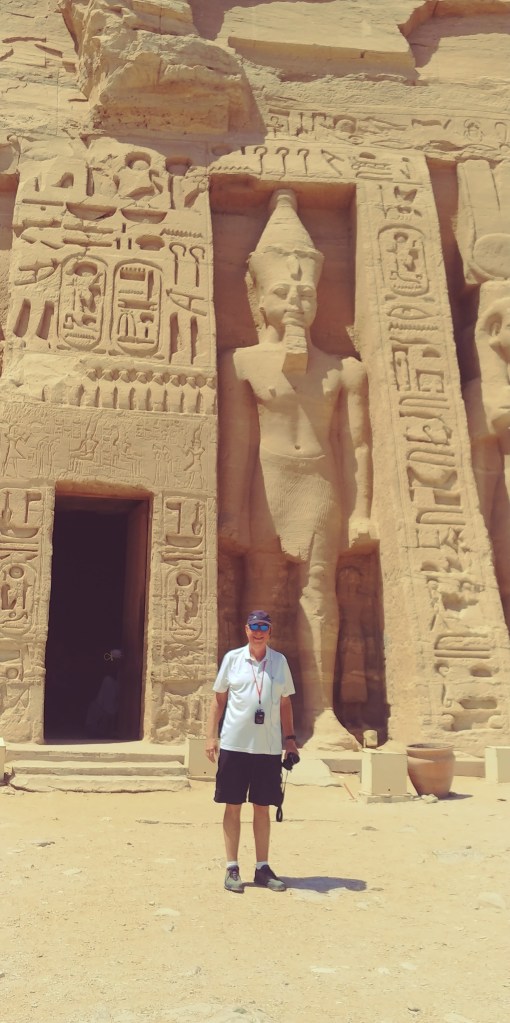
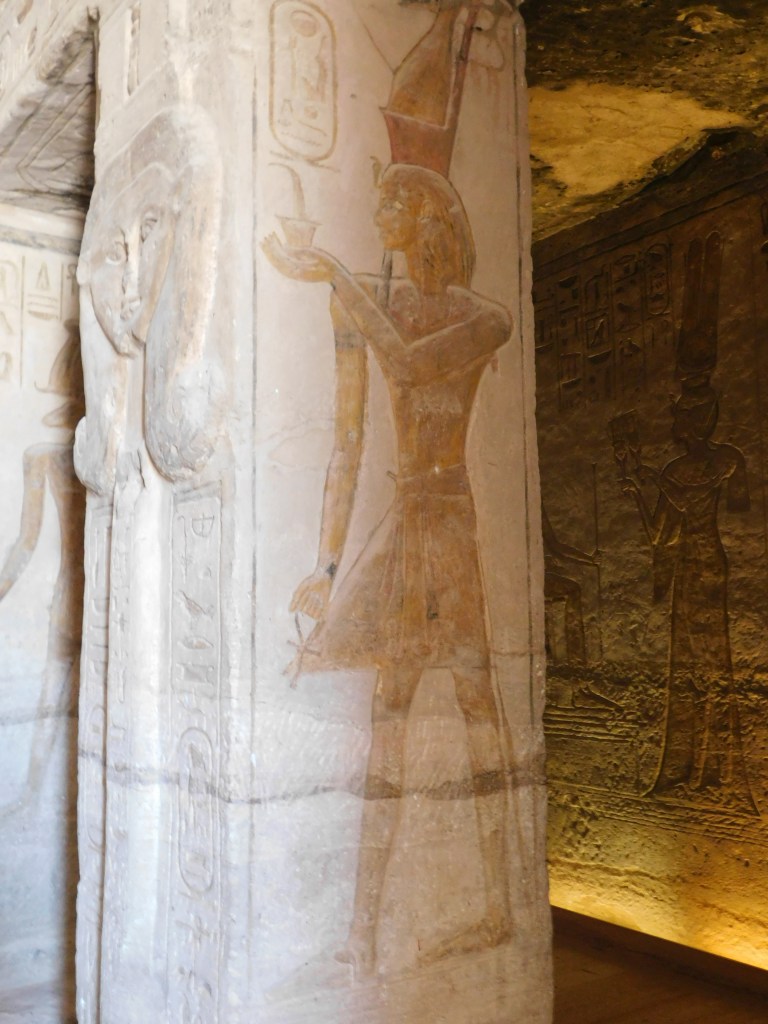
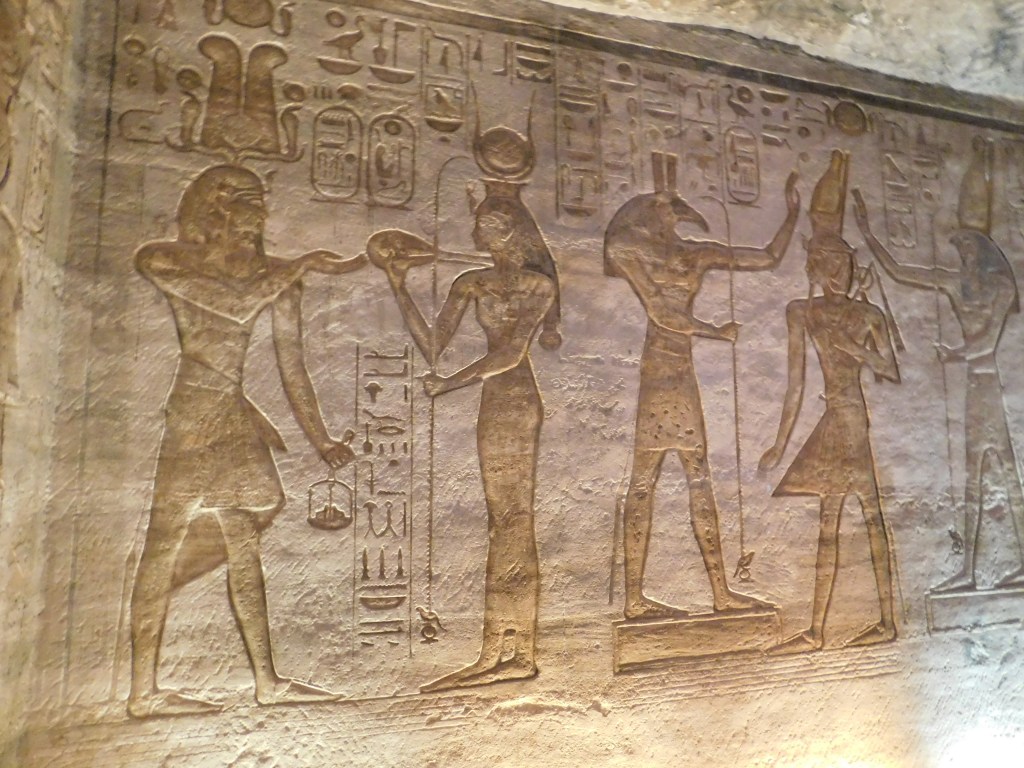
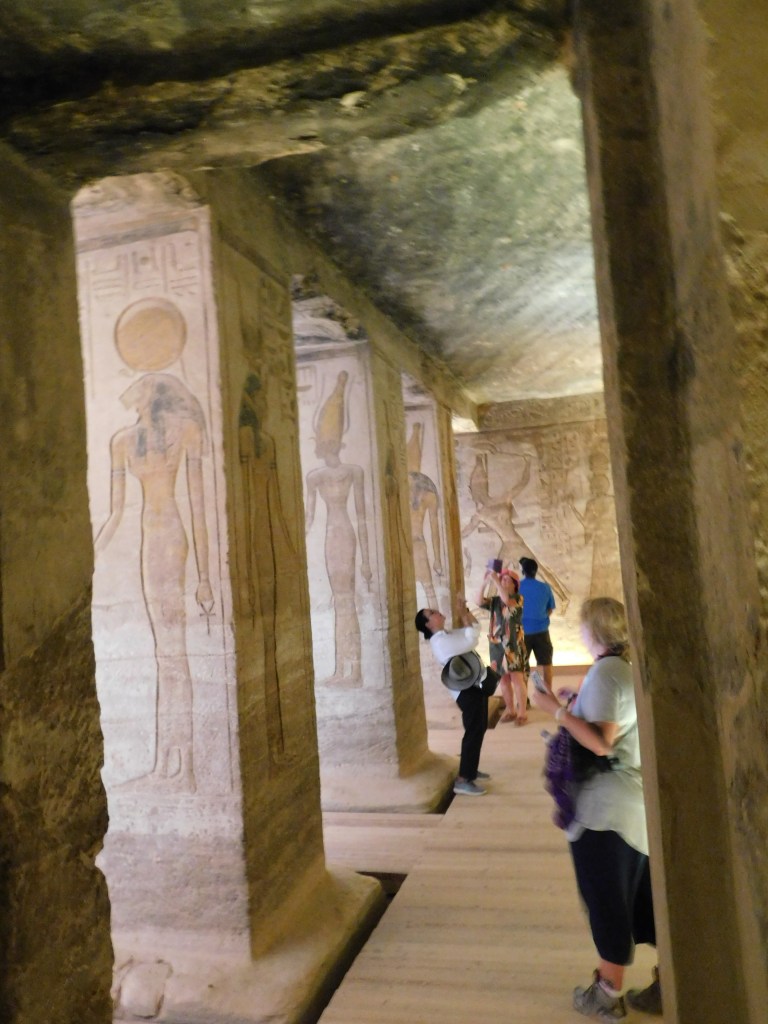
We left the Queen Nefertari temple and had to head back to the bus to the airport. Here is the view, leaving the site, of both temples.
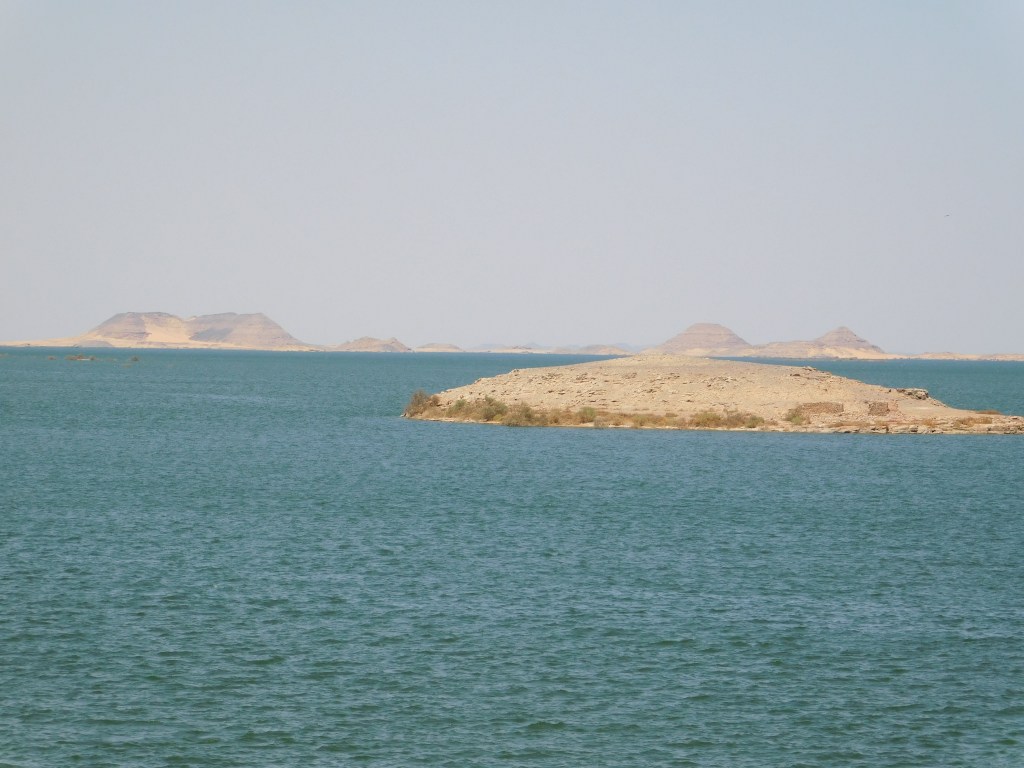
Here is the view of the artificial Lake Nassar from atop the temple mountain. That island looking thing is actually the top of a mountain from before they flooded the valley. Lake Nassar is over 500 feet deep in spots. It also is full of Egyptian crocodiles, which prohibits the scuba divers and swimmers of the world from going into the lake.
Speaking of crocodiles, the Egyptians made the God Sobek in the image of a crocodile. They considered them very important in their religion.
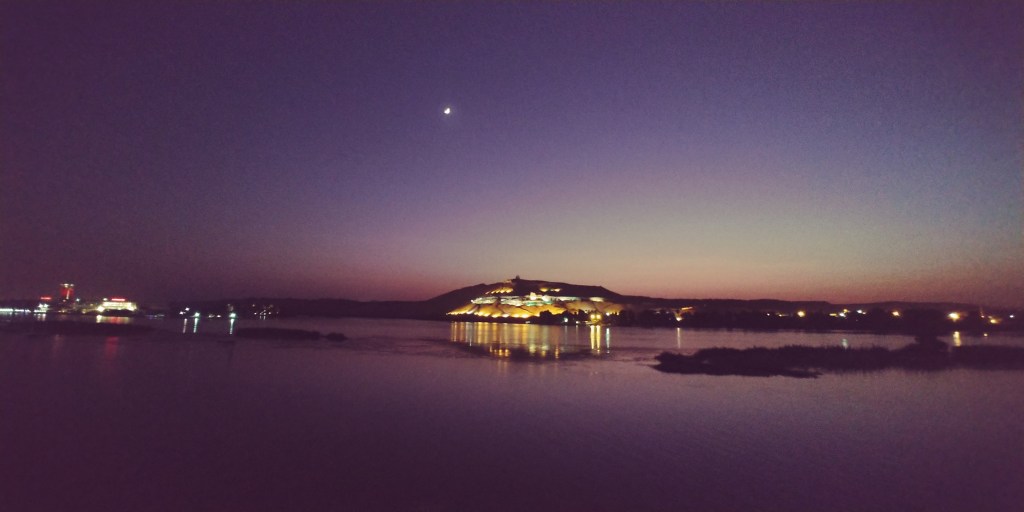
We jumped back on the plane to Aswan and then on the bus back to the Viking Antares. We then pushed off, heading north to Kom Ombo. Along the way we saw a waterfront temple lit up for the night.

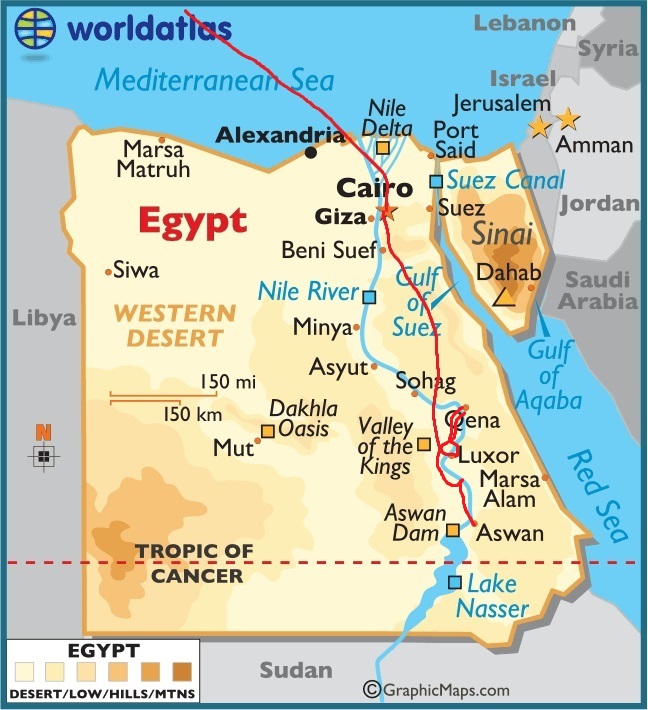
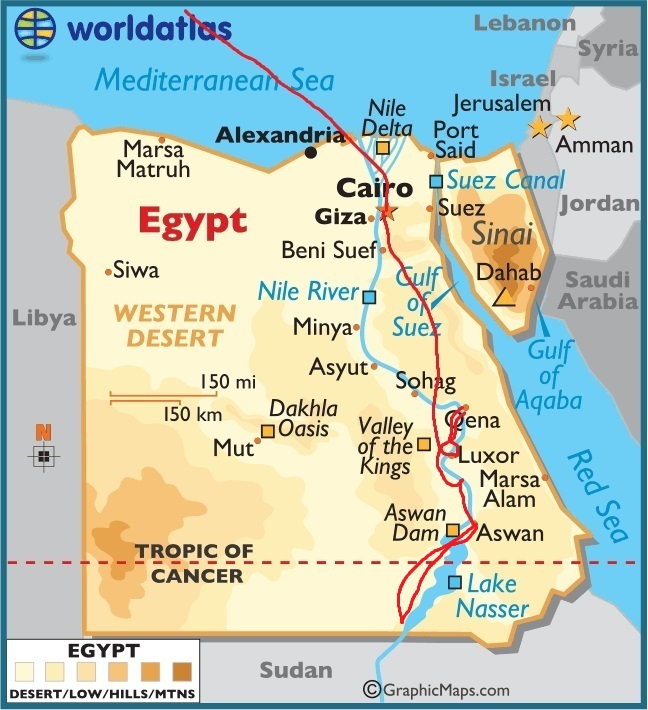
Map progress – Esna, Egytp to Aswan, Egypt by boat. Aswan, Egypt to Abu Sumbel, and back, by plane.


 Andrea and Randy Goodell explore Europe, Asia, United States, the Caribbean, and then move to Portugal!
There is noticeably a bundle to know about this. I consider you made various good points in features also.
LikeLike
I am glad you enjoyed the blog. The Temples at Abu Simbel are truly amazing.
LikeLike
We stumbled over here from a different website and thought I should check things out. I like what I see so now i’m following you. Look forward to exploring your web page again.
LikeLike
I am glad you enjoyed the blog. Egypt really is an amazing part of the planet. The history is incredible.
LikeLike
I am only commenting to make you be aware of of the amazing encounter my princess experienced studying your blog. She noticed many issues, which included what it’s like to possess an ideal helping mindset to make others without hassle learn about a number of advanced issues. You truly surpassed her expectations. Many thanks for giving these powerful, dependable, explanatory and even easy thoughts on this topic to Sandra.
LikeLike
I am glad you enjoyed the blog. More to come as we continue to travel.
LikeLike
I simply couldn’t go away your website prior to suggesting that I actually loved the usual information an individual provide on your visitors? Is going to be again ceaselessly in order to check out new posts
LikeLike
Thanks, I am glad you enjoy the blog.
LikeLike
What’s Happening i am new to this, I stumbled upon this I have discovered It positively useful and it has helped me out loads. I’m hoping to give a contribution & assist different users like its aided me. Great job.
LikeLike
I am glad you like the site. I have done this to tell about our travels around the world. No help is needed, but thanks for offering.
LikeLike
naturally like your website however you need to take a look at the spelling on several of your posts. A number of them are rife with spelling problems and I in finding it very troublesome to inform the reality nevertheless I’ll definitely come again again.
LikeLike
Sorry. I will be sure to double check my spelling in the future. I am glad you like the site.
LikeLike
Thank you for your own labor on this site. My aunt delights in working on investigations and it is simple to grasp why. Many of us learn all of the powerful way you provide vital thoughts via your web blog and even cause participation from people about this topic and our girl is without question learning a lot of things. Have fun with the rest of the year. You are conducting a pretty cool job.
LikeLike
I am glad you like the site. This is not a job. These are sites of the traveling my wife have done, as we are now retired.
LikeLike